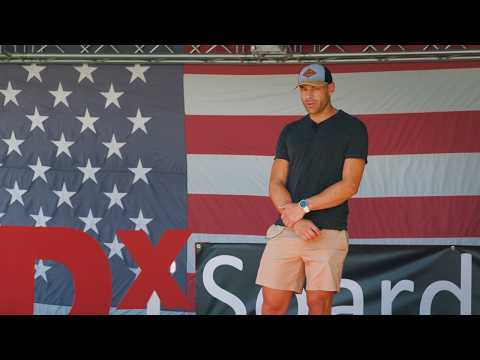
Matt Russell: “Gratitude Wins”
The 2017 Kona Crash, A Severed Jugular, and the 6th Place World Championship Comeback

Gratitude Wins
Presented by Matt Russell
About Matt Russell
Professional Ironman Triathlete & Performance Coach
Matt Russell is a premier American professional triathlete with over forty professional Ironman podiums. After losing his mother to ALS at thirteen, Matt channeled grief into endurance excellence. During the 2017 Ironman World Championship in Kona, Hawaii, an unauthorized van penetrated the race barricades, colliding with Matt and severing his external jugular vein. Saved on the asphalt by a quick-acting spectator, Matt executed a rigorous 12-month rehabilitation rooted in radical gratitude, breathwork, and immediate action—returning to Kona in 2018 to post the 3rd fastest American time in event history.
“Adversity is not an attack; it is pure diagnostic feedback. When gratitude controls your nervous system, no setback can stop you.”
Matt Russell on the Red Circle Carpet
Aggregated directly from the main TEDxSoardsRoad stage gallery (4 photos). Click any photo to enlarge.
Deep Dive: Speech Summary & Key Takeaways
8 min readMatt Russell details his journey from losing his mother to ALS at thirteen to surviving a catastrophic collision on the Kona Ironman course that severed his jugular vein. Returning 12 months later to finish 6th in the world with the 3rd fastest American time in event history, Matt shares his three-part breathwork and radical gratitude protocol.
- 1Gratitude is not a passive sentiment; it is a measurable physiological state that accelerates cellular and neurological healing.
- 2Adversity must be treated as diagnostic data to recalibrate performance strategy.
- 3Action must consistently precede psychological readiness during high-stakes recovery.
Drill Down FurtherRead Full Chapter-by-Chapter Talk Analysis (3 Chapters)
The 3-Part Radical Gratitude Protocol
Matt Russell's somatic and mental regulation routine used to rebuild an elite world-class athletic engine after life-threatening trauma.
Treating external adversity strictly as objective biometric feedback rather than personal injustice.
Using 4-7-8 and box-breathing cadence to immediately down-regulate sympathetic fight-or-flight panic.
Executing physical training and operational steps before feeling psychologically comfortable or ready.