July 4, 2026 Stage • AI & Human AgencySession 2: Human Agency in the Age of Algorithms: Disruption & Applied AI

Barbie Ray: “When the Data Disappears”

Algorithmic Brittleness, Black Swans, and the Irreplaceable Power of Human Intuition

When the Data Disappears
Official 4K Stage Recording • Click to Play

When the Data Disappears

Presented by Barbie Ray

Recorded at Queenslake Horse Farm • July 4, 2026

About Barbie Ray

Automotive Executive & Enterprise Resilience Strategist

Barbie Ray is a veteran automotive collision executive, organizational strategist, and keynote speaker. Having survived a direct lightning strike, complete temporary neurological paralysis, multiple complex spinal surgeries, and protracted rehabilitation, Barbie simultaneously steered independent collision enterprises through the 2008 financial collapse and the 2020 supply-chain shutdowns. Her talk analyzes why predictive machine learning architectures fail during unmodeled disruptions and why earned human intuition remains our ultimate competitive edge.

“Algorithms thrive on yesterday's certainty. But when black swans arrive and data flatlines, human intuition is the only compass left.”
Speaker Stage Mini-Gallery

Barbie Ray on the Red Circle Carpet

Aggregated directly from the main TEDxSoardsRoad stage gallery (4 photos). Click any photo to enlarge.

Red Circle Stage • Photo 1 of 4

Barbie Ray

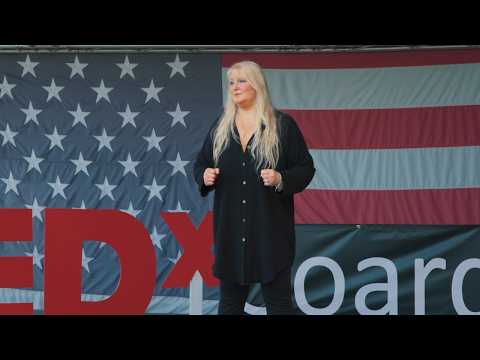
Barbie Ray delivering "When the Data Disappears" on the TEDxSoardsRoad stage

Barbie Ray — "When the Data Disappears" (Main Stage Portrait)

Deep Dive: Speech Summary & Key Takeaways

8 min read
Core Ideas from This Talk

Barbie Ray deconstructs the systemic limits of predictive artificial intelligence when confronted with unprecedented environmental shifts. Drawing on her survival of a direct lightning strike, neurological paralysis, and leading automotive enterprises through the 2008 and 2020 supply shocks, Barbie delivers a masterclass on executive agility when all predictive models fail.

  • 1Machine learning models are inherently backwards-looking and fail during genuine black-swan events.
  • 2Physical and operational crises require embodied intuition, decisive action, and rapid iteration.
  • 3The ultimate competitive advantage in the AI era is not more data, but human leaders who know what to do when there is none.
Drill Down Further
Read Full Chapter-by-Chapter Talk Analysis (3 Chapters)
Analytical Framework

The Unmodeled Crisis Decision Matrix

How executives pivot when machine learning predictions flatline during black-swan events.

11. Recognize Model Paralysis

Identify when predictive algorithms are hallucinating confidence based on obsolete historical distributions.

22. Activate Embodied Intuition

Engage executive pattern recognition derived from lived physical and operational scar tissue.

33. Decentralize Frontline Decision Making

Empower ground-level teams to execute micro-experiments rather than awaiting centralized corporate mandates.

Chapter 1: The Lightning Strike & The Neurological Reboot

In a fraction of a second, an atmospheric lightning strike channeled millions of volts directly through Barbie Ray's body. The result was immediate, complete temporary neurological paralysis, followed by agonizing spinal surgeries and years of protracted rehabilitation. This visceral experience of having all normal sensory data cut off taught Barbie an indelible lesson: when the system's baseline data streams disappear, the core organism must rely on deeper instinctual resilience to navigate the darkness.

Chapter 2: The Limits of Machine Learning in Enterprise Crises

As an executive directing large-scale automotive collision operations, Barbie observed how enterprise leaders became hopelessly addicted to predictive analytics. Yet in 2008 when the credit markets seized, and again in 2020 when global supply chains froze overnight, every enterprise algorithm failed. Machine learning architectures are fundamentally interpolation engines—they predict the future by analyzing past curves. When an unprecedented black swan occurs, the curve ceases to exist, and the algorithm freezes.

Chapter 3: Human Intuition as the Unfair Advantage

Barbie demonstrates that human adaptability is not a quaint relic of the pre-digital era; it is the ultimate risk hedge. By combining rapid observational sensing with moral courage, leaders can pivot businesses before the competition even realizes the old data model is dead.