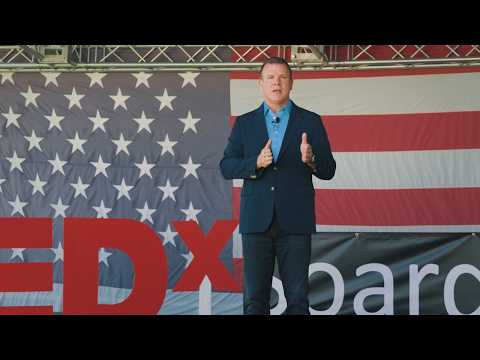
July 4, 2026 Stage • Neuroscience of LeadershipSession 4: Transformational Inquiry & The Horizon Ahead

Dr. Dan Docherty: “What Do You Dream About?”

How Singular Transformative Inquiry Alters Neurochemistry and Unlocks High-Trust Leadership

What Do You Dream About?
Official 4K Stage Recording • Click to Play

What Do You Dream About?

Presented by Dr. Dan Docherty

Recorded at Queenslake Horse Farm • July 4, 2026

About Dr. Dan Docherty

Chief Coaching Officer at Braintrust & Miami University Faculty

Dr. Dan Docherty is the Chief Coaching Officer at Braintrust and a faculty member at Miami University's Farmer School of Business. Applying clinical neurobiology to executive hierarchies, Docherty analyzes how modern task-saturated corporate routines trigger chronic sympathetic fight-or-flight reactivity. He proves that asking a single transformative question—'What do you dream about?'—bypasses the brain's threat circuitry, dampens amygdala hyperactivity, and stimulates parasympathetic oxytocin pathways to unlock profound collaborative trust.

“When you ask 'What do you dream about?', you silence the amygdala's threat loop and invite the nervous system into co-creation.”
Speaker Stage Mini-Gallery

Dr. Dan Docherty on the Red Circle Carpet

Aggregated directly from the main TEDxSoardsRoad stage gallery (4 photos). Click any photo to enlarge.

Red Circle Stage • Photo 1 of 4

Dr. Dan Docherty

Dr. Dan Docherty delivering "What Do You Dream About?" on the TEDxSoardsRoad stage

Dr. Dan Docherty — "What Do You Dream About?" (Main Stage Portrait)

Deep Dive: Speech Summary & Key Takeaways

8 min read
Core Ideas from This Talk

Dr. Dan Docherty applies clinical neuroscience to modern corporate hierarchies, proving that standard operational check-ins trigger chronic threat loops. By replacing transactional metrics with the singular question 'What do you dream about?', leaders activate oxytocin release and stimulate deep collaborative trust.

  • 1Transactional questioning triggers chronic stress and defensive compliance in teams.
  • 2Aspirational inquiry fundamentally changes brain chemistry, stimulating oxytocin and parasympathetic safety.
  • 3Aligning company objectives with personal human dreams produces exponential organizational performance.
Drill Down Further
Read Full Chapter-by-Chapter Talk Analysis (3 Chapters)

Chapter 1: The Transactional Threat Loop

Modern workplace check-ins ('Did you hit the KPI?', 'What's the status on project X?') are processed by the human brain as status evaluations, activating the amygdala and elevating baseline cortisol. Over time, teams enter chronic fight-or-flight states, killing creative risk-taking.

Chapter 2: The Neurobiology of Transformative Inquiry

When an executive genuinely asks an employee 'What do you dream about?', the brain is forced to disengage threat-monitoring networks and activate the default mode network and prefrontal cortex. This triggers parasympathetic down-regulation and oxytocin release, establishing deep psychological safety.

Chapter 3: Dream Leadership in Practice

Docherty shares case studies from Fortune 100 engagements where leaders transitioned from policing outputs to aligning organizational goals with individual life aspirations, resulting in record retention, breakthrough patents, and unbreakable cultural alignment.